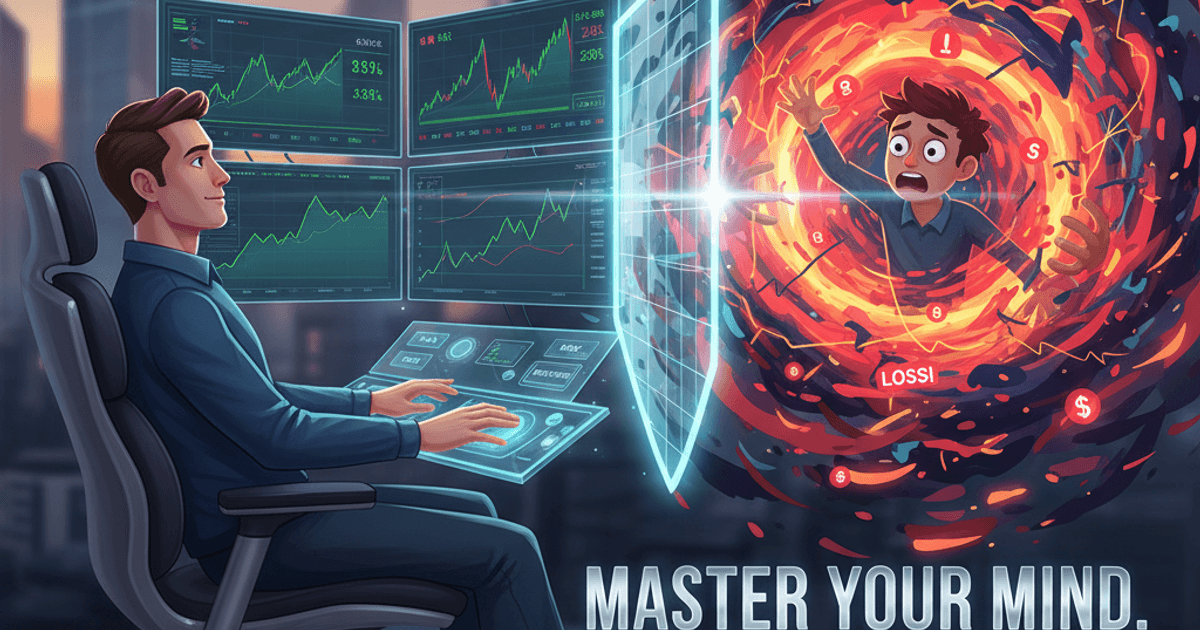
How to Avoid Emotional Trading in Forex (From a Trader's Perspective)
Learn the most important skill in forex trading: controlling emotions. Discover practical techniques from 30 years of trading experience to avoid panic decisions and build consistent, rules-based trading habits.
Chris
30 years trading
How to Avoid Emotional Trading in Forex
When traders ask me how to avoid emotional trading in forex, I always remind them that emotions don’t disappear—you simply learn to manage them with structure, self-awareness, and repeatable processes.
Below is the exact framework I teach traders in my community to help them stay calm, objective, and consistent—even on high-volatility days.
Why Emotional Trading Happens
Before fixing the problem, I first identify the constraints causing it (tiny accounts, revenge trading, no plan, uncertainty, pressure to “make it back”). Understanding these drivers helps reduce emotional spikes dramatically.
Common triggers include:
Trading without a rule-based system
Oversizing positions
Trading when tired, stressed, or after a losing streak
Over-monitoring the P&L instead of the chart
Lack of a structured routine
Taking signals from fear instead of data
Once I identify the specific constraint, I fix just that one thing first—because in trading, bottlenecks always have power-law impact.
1. Build a Rule-Based Trading Plan
A written trading plan removes reaction-based decision-making.
Your plan should define:
Entry criteria
Exit criteria
Stop-loss placement
Position sizing
Market sessions you trade
Market conditions you avoid
A maximum number of trades per day
When I follow a plan, emotional drift almost disappears. When I don’t, emotions take over quickly.
2. Predefine Your Risk Per Trade
Most emotional trading comes from oversizing.
I never risk more than:
1% per trade (for new traders: 0.5% is even better)
When your risk is small, your emotions stay small. When your risk is huge, your emotions will dominate every decision.
3. Reduce Chart Time and Avoid Overtrading
Watching every tick creates emotional attachment.
I set strict limits:
Maximum 2–4 trades per day
No constant chart watching
Alerts placed at key levels instead of staring at candles
This keeps my cognitive load low and helps me remain objective.
4. Use a 'Pre-Trade Checklist'
Before entering a trade, I run through a simple checklist:
Does this trade meet my system rules?
Is the market condition right for my strategy?
Is the stop-loss logical and placed correctly?
Is the position size correct?
Am I trading from a calm state?
If any box fails, I skip the trade. That’s saved me a lot of pain over the years.
5. Keep a Trading Journal
Documenting my trades is one of the strongest anti-emotional tools.
Every day I record:
Why I took a trade
My emotional state
What went well
What I would change
Mistakes caused by emotion
This helps me spot patterns—especially revenge trading and FOMO entries.
6. Build a Trading Routine
Professional traders follow routines because routines reduce uncertainty.
My personal routine includes:
Pre-market prep (news, key levels, volatility expectations)
Reviewing my system
Checking emotional state
Setting time blocks
Post-trade review
A calm routine equals calmer decisions.
7. Accept Losses as Part of the Game
Some traders lose because they cannot emotionally accept losing.
Here’s what helped me fix that:
I treat each trade as one of hundreds
I never focus on the monetary value
I focus on following the process instead of the outcome
I zoom out to weekly/monthly performance, not daily
Once you remove the fear of losing, emotional trading collapses.
8. Use Tech to Reduce Emotional Decisions
Automating parts of your workflow can help:
Use our chat to generate levels register FREE at www.botfx.ai
Automated stop-loss placement
Visual alerts
Journaling tools , and yes we have this covered , AGIAN we give this away FREE at www.botfx.ai
Probability indicators
The less manual thinking, the fewer emotional swings.
FAQs
1. What causes emotional trading in forex?
Emotional trading happens when you trade without a plan, risk too much, or allow fear and greed to influence your decisions. Fatigue, stress and inconsistency also contribute.
2. How do I stop revenge trading?
Reduce position size, step away after a loss, and set a maximum daily loss limit. Revenge trading usually comes from trying to “fix” a mistake.
3. Should I take breaks while trading?
Yes. Breaks reset your emotional baseline and reduce impulsive execution. Even professional traders step away frequently.
4. Does journaling really help with emotions?
Absolutely. Journals reveal patterns you can’t see in real time, especially emotional triggers and mistakes you repeat.
5. Can automation reduce emotional trading?
Yes. Automated alerts on our PAID service we do alert you of potential trades , trade management, and predefined order placement remove reaction-based decisions and keep execution consistent.
Trading Disclaimer
Trading involves substantial risk and is not suitable for everyone. Past performance is not indicative of future results. Always conduct your own research.
Related Articles
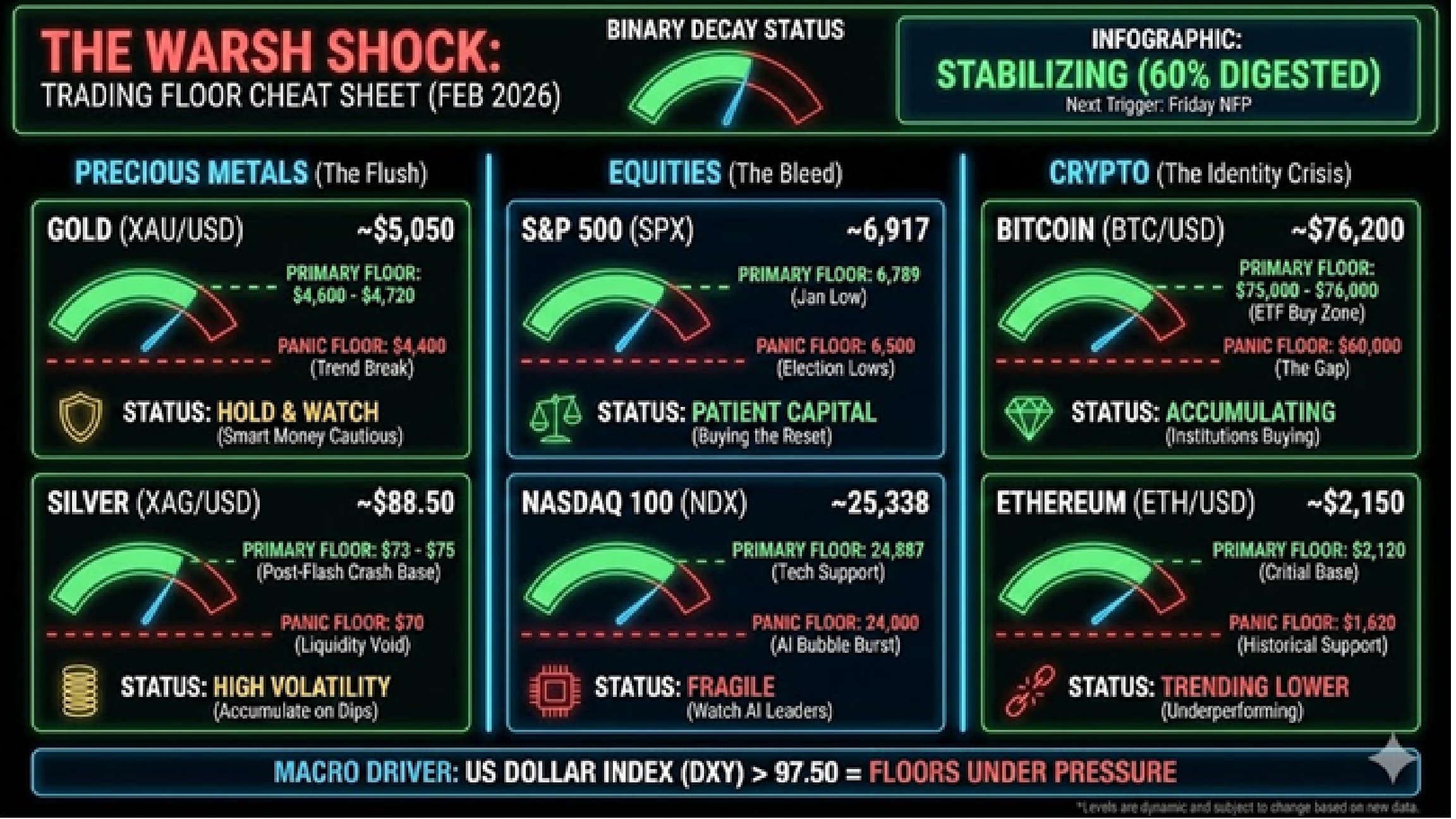
The "Warsh Shock": Why Silver Just Crashed 31% and the New Rules of 2026
Why did Silver crash 31% and Bitcoin bleed? The "Warsh Shock" has rewritten the 2026 playbook. Discover the new support floors and what happens next.
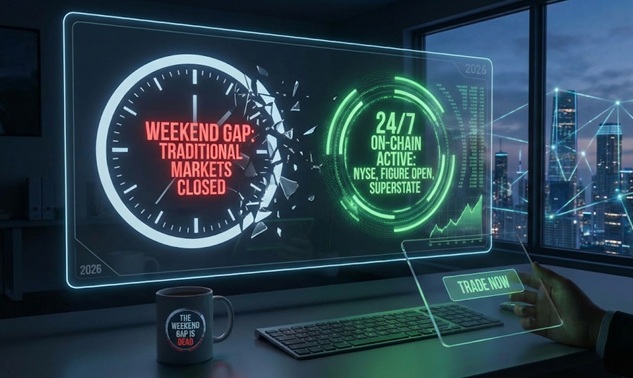
The Weekend Gap is Dead. Here’s How to Stop Bleeding Money.
If you are still waiting for the Monday morning bell to react to weekend news, you aren’t just late—you are the exit liquidity. The "Weekend Gap" is officially dead, replaced by 24/7 on-chain venues that let you trade, hedge, and settle instantly while the old world sleeps. Read this to discover the new 2026 infrastructure that kills settlement drag and reveals hidden arbitrage spreads, finally closing the gap between you and the institutions.
What Bitcoin & Ethereum Whales Are Doing Amidst the Storm
Navigating the Tides: What Bitcoin & Ethereum Whales Are Doing Amidst the Storm (February 2, 2026)